


Available for freelance & full-time

Building reliable .NET backends that hold up in production.

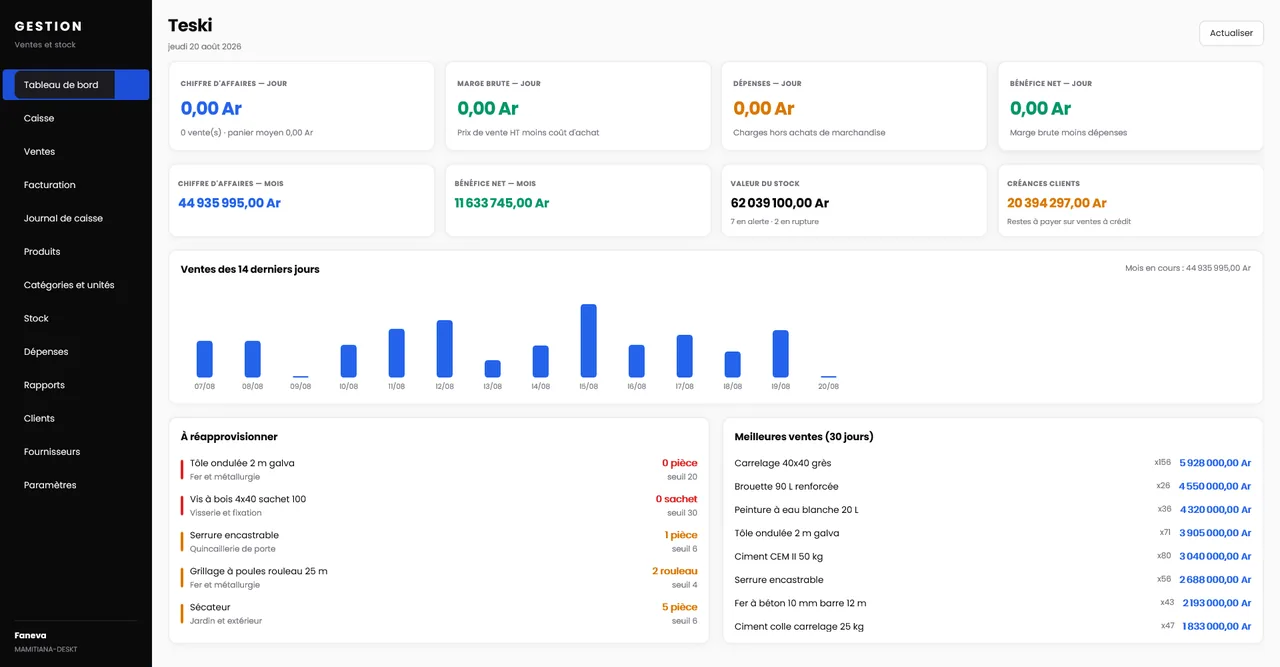
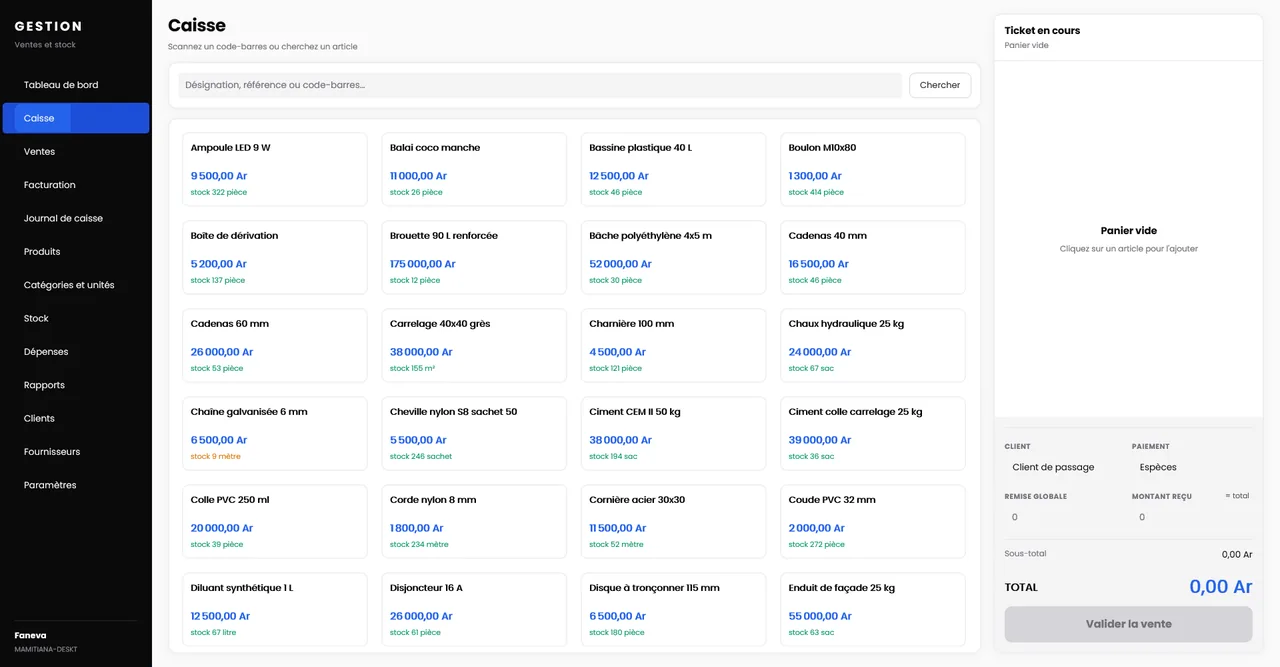
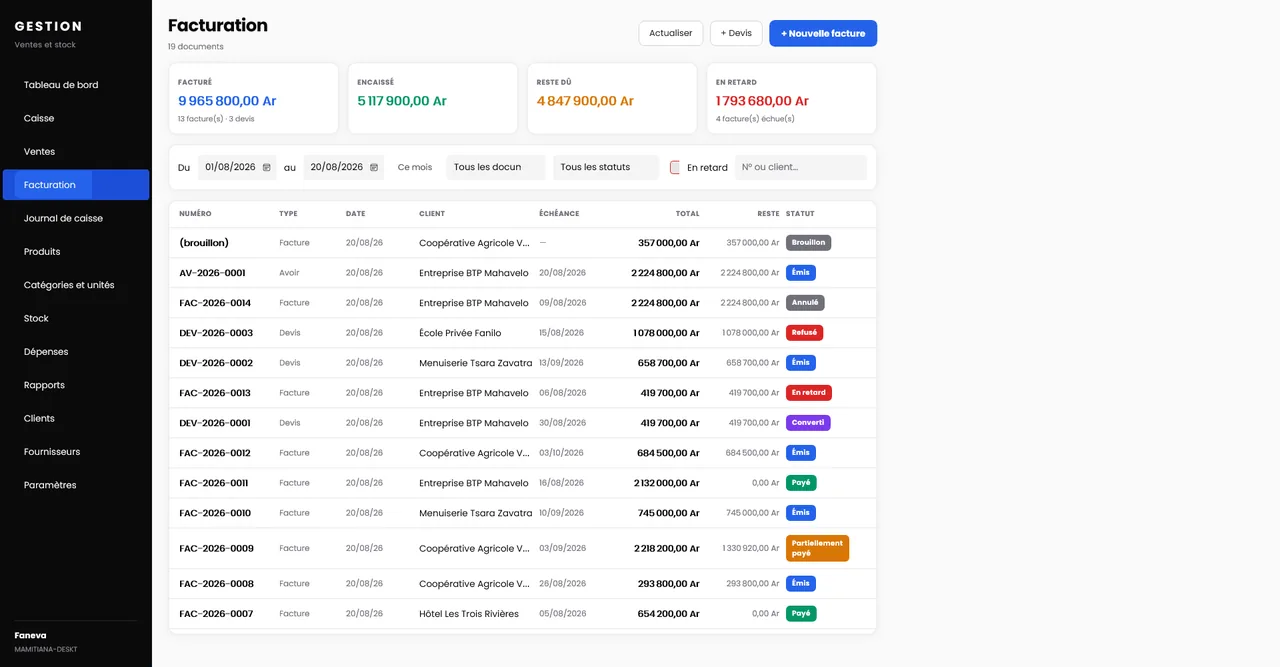
I'm Mamitiana Faneva, a fullstack developer in Antananarivo. ASP.NET Core APIs at ICP Conseil since May 2025; Spring Boot, Next.js and Flutter before that.

Years shipping
3+
Companies
5
Tools & languages
30
Portrait of Mamitiana Faneva ANDRIAHARIMANANA

01 — Skills

Everything I work with.

Hover a logo to tilt it, click to spin it.

Backend

13

Frontend

6

Mobile

3

Databases

4

Tools

4

How I work

  • AutonomyAble to adapt and make decisions
  • Open to new thingsLearning new tools to grow
  • CreativeIdeas for useful new features

Languages

  • FrenchFluent
  • EnglishIntermediate

02 — Experience

Five companies, one direction.

From a first internship in 2023 to .NET in production today.

  1. 01Aug – Nov 2023

    Nexitia Technologies

    Fullstack Developer, intern

    Antananarivo

    • Worked on a dynamic website in HTML, CSS, JavaScript, Java and PostgreSQL.
    • My first production code, and the moment web development became the job.

    JavaJavaScriptPostgreSQL
  2. 02Feb 2024 – Jul 2025

    Energetics SARL

    Fullstack Developer

    Remote

    • Built a licence management web app on a Spring Boot backend.
    • Automated key processes behind secure REST APIs, cutting manual errors.
    • Real-time visibility into licence usage for the team.

    Spring BootJava
  3. 03Jul – Oct 2024

    AkeTech Agency

    Frontend Developer

    Ivato · hybrid

    • Designed and built a web app for tourists with Next.js.
    • Responsive on every device, with accessibility checked along the way.

    Next.jsReact
  4. 04Nov 2024 – Jan 2026

    Seven7 Mada

    Mobile Developer

    Antanandava

    • Developed the company's mobile platform with Flutter.

    Flutter
  5. 05May 2025 – nowNow

    ICP Conseil

    .NET Developer

    Remote

    • Builds backend systems with ASP.NET Core, with application reliability as the goal.
    • Designs secure REST APIs used by the frontend and by third-party services.
    C#.NET

03 — Education

Where it started.

From Antsirabe to Antananarivo, and now a second-year Master's in France.

  1. 2013 – 2020

    Scientific baccalaureate

    Gallo Junior private high school · Antsirabe I

    A solid academic background, and the foundations for everything after.

  2. 2020 – 2023

    Bachelor's in Web Development & Design

    IT University · Antananarivo

    • Mobile development
    • Project management
    • Web design & optimisation
    • Database management
  3. Dec 2025 – Sep 2026

    Master's in Computer Science

    IT University · Antananarivo

    First year, alongside the .NET developer role at ICP Conseil.

  4. Oct 2026 – now

    Master 2 BIHAR

    ESTIA engineering school · Bidart, France

    Big Data Intelligence for Human Augmented Reality.

04 — Projects

Selected work.

Drag, swipe or use the arrows. It goes round: after the last project comes the first.

05 — Blog

Notes from the desk.

What I learned along the way, and what I would tell a developer starting out.

From a first glimpse of code at Gallo Junior to React fronts and Spring Boot APIs built for clients as a freelancer.

Fullstack frameworks, AI behind simple APIs, accessibility and speed: the shifts shaping how the web is built.

Fundamentals first, an IDE that works for you, SOLID, the six-month release train and open source.

06 — Contact

Need a .NET developer on your team? Let's talk.

Freelance missions or a full-time role, remote or in Antananarivo.

Start a conversation
LinkedIn GitHub Phone CV

My Journey in Web Development: From Beginner to Fullstack Freelancer

Welcome to my blog! My name is Mamitiana Faneva, full-stack web developer and freelancer. For over a year, I have been exploring the world of web development with passion. I created this portfolio to share my journey, my skills, as well as the projects that shaped my experience. Through this article, I will tell you how I went from beginner to professional, discovering exciting technologies and working on varied projects.

My first steps

My adventure began at the Gallo Junior private high school, where I had a first glimpse of the potential of computer science. After high school, I continued my studies at IT university, where I developed my theoretical and practical skills. However, it was during my first personal projects that I really dove into the world of web development.

The First Technical Skills

Very quickly, I discovered front-end development with technologies like HTML, CSS and JavaScript. The React framework was a real favorite, and allowed me to build dynamic and responsive user interfaces.

On the back-end side, my interest was in Spring Boot, with which I created robust APIs. I also experimented with generating PDF files in more complex projects, which gave me a deeper understanding of data manipulation in Java.

From Developer to Freelance

With time, I gained enough skills to start out as a freelancer. Working for different clients broadened my experience across varied areas, from financial portfolios to React applications and Spring Boot tools. Each project strengthened my ability to run a project end to end, combining rigour and creativity.

Conclusion

Today, I continue to learn and adapt to new trends in web development. My goal is to always offer creative and effective solutions to my clients. Through this blog, I hope to be able to inspire other developers or enthusiasts to embark on this adventure. If you have any questions or would like to collaborate, please do not hesitate to contact me.

Web Development Trends in 2024: What You Need to Know

Web development is constantly evolving, with new technologies, trends and practices redefining the way sites and applications are created every year. In 2024, several innovations and methodologies are shaping the web development landscape. In this article, we'll explore this year's biggest trends and how they're influencing how developers build digital experiences.

The Rise of the Fullstack Frameworks

Fullstack frameworks continue to gain popularity due to their ability to handle both front-end and back-end development. Next.js and Nuxt.js have become essential tools, simplifying server-side rendering and enhancing application performance. In 2024, these frameworks offer more built-in features, reducing development complexity and improving overall efficiency.

The Integration of Artificial Intelligence (AI)

AI is having a profound impact on how web applications are built. Tools like ChatGPT and Midjourney enable the creation of virtual assistants, improve user experiences with personalized recommendations, and optimize content management. In 2024, integrating AI is becoming more accessible to developers through simplified APIs, allowing even smaller projects to benefit from advanced AI features.

Accessibility and UX at the Forefront

The emphasis on web accessibility is stronger than ever in 2024. Developers must adopt web accessibility best practices (WCAG) to ensure their applications are usable by a wide range of people, including those with disabilities. At the same time, UX/UI trends focus on creating clean, intuitive, and fast-loading interfaces that provide seamless user experiences.

Performance and Optimization

Performance remains a crucial topic in 2024. Tools like Web Vitals allow developers to measure and improve the quality of user experiences. Additionally, the use of tools such as Webpack and Vite continues to optimize site loading speeds through techniques like lazy loading and on-the-fly compilation, making web applications faster and more efficient.

Conclusion

Web development in 2024 is more exciting than ever, with a host of new trends pushing the boundaries of technology. Whether it's AI, Web3, accessibility, or PWAs, developers have a range of tools and practices that enhance both the performance of websites and the user experience. Stay ahead of these trends and consider incorporating them into your projects to remain competitive and offer cutting-edge solutions.

5 Essential Tips to Become a More Effective Java Developer

Java is one of the most used programming languages in the development world, whether for web applications, embedded systems, or business solutions. However, to master Java, it is important to adopt certain best practices and use the right tools. In this article, we'll walk you through 5 essential tips to become a more effective and productive Java developer.

Mastering the Fundamentals of Java

Before diving into complex frameworks like Spring or Hibernate, it is essential to have a good command of the basics of Java. This includes managing collections, understanding interfaces, abstract classes, and exception handling. Having a solid understanding of the basics will allow you to better understand advanced technologies.

Use a Powerful IDE

An integrated development environment (IDE) like IntelliJ IDEA, Eclipse, or NetBeans is essential to save time and code more efficiently. These tools offer refactoring features, Maven/Gradle project management, and debuggers that make development easier. Also use plugins that adapt to your needs, such as those for Git or integration with databases.

Follow the SOLID Principles

The SOLID principles are guidelines that help you write clean, modular, and maintainable code. These principles include single responsibility, extension rather than modification, and separation of interfaces. Adopting these practices will allow you to create well-structured Java applications that are easy to evolve.

Track Java Updates

Java evolves quickly with new versions released every six months. It is essential to keep up with the latest features and improvements. For example, Java 17 (LTS) introduced features like sealed classes and performance improvements. Stay up to date by reading blogs, following tutorials, or attending conferences so you don't miss out on innovations.

Contribute to Open Source Projects

Contributing to open source projects is a great way to practice, learn, and connect with other developers. This not only allows you to improve your technical skills, but also to familiarize yourself with collaborative development practices and version management on platforms like GitHub or GitLab.

Conclusion

Java is a powerful language, and by following these tips, you can not only improve the quality of your code, but also become a more productive and competent Java developer. Whether you're a beginner or an experienced developer, the learning never stops. Continue to explore new features and adopt best practices to stay at the forefront of Java development